PageRank Methodology
June 10th, 2008First off, everyone is to understand I don’t work for Google and nobody besides them actually knows how the PageRank algorithm really works. So this post could be made up pure fiction or facts. On a much more serious note, the following may seem quite obvious to an experienced SEO/SEM, but I wanted to have my name in the pot for the dumbest post of 2008.
Link Building in Reverse
For years people are constantly trying to score those high page rank links for their home page and forgetting about those important sub pages. My studies show that sub pages are just as important when trying to increase your page rank. Why you might ask?
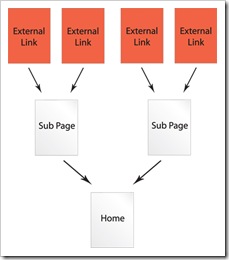
Have you ever seen a sub page with a higher page rank than it’s parent? In all my years I have never. So my thought here is if you build your linking profile to include your sub pages you will also see the additions on your home page also.
I think it is a methodolgy most are not consciously aware of even though they see their home page is always a higher than their subs. So my theory in point, is that the sub page is much more important than most give it credit for.
If you stay focused on that train of thought, you should be able to find more relevant linking opportunities since most sub pages or sections of your site may cover different topics.
In conclusion, my theory is inbound page rank is an accumulation of both subs and home, while outbound slowly trickles downwards from it’s parent (per say Home) to subs. It is common sense, but I feel it is somehow overlooked sometimes.
Posted in Google, Internal SEO, Link Building •